





The Colorful History of the Joint - A Journey to Its Origins

What lies behind the term "Joint"?
The word "Joint" originally comes from French and means something like "joint" (as in a connection). As early as 1877, the term had already become a common expression in the American construction industry. In 1935 it was then used to describe the hypodermic needles primarily used to inject heroin and opium. In 1938 came the first records of the term "Joint" being used for a marijuana cigarette in the USA. This development can probably be traced back to the slang of that era. Today it goes by many names; this partly serves discretion and, among other things, depends heavily on the region. The most common European variant is the "Spliff". This term has been circulating since 1936 and describes a "cigarette" partly filled with cannabis. Its origin, however, is completely unknown.
How did the joint come about?
The joint probably originated in 19th-century Mexico, where workers rolled cannabis in thin paper. Through Mexican migrants and jazz musicians, the hand-rolled joint spread in the USA in the early 20th century. In the 1960s counterculture, the joint became a worldwide symbol. The name goes back to the French word for "joined".
Cannabis was already smoked before the first joints even existed
Back then the joint was actually not one of the original methods of cannabis consumption at all. History teaches us that marijuana was smoked primarily in (water) pipes.
As early as 2700 BC, cannabis was used as medicine all over the world.

Asia and Africa
The use of marijuana as a medicine in China can be traced back to the year 200 AD. In Arabia, the use of hashish was already being discussed around the year 1200 AD. Marco Polo reported on assassins who used hashish, and as early as the 14th century there were pipes in Ethiopia that contained cannabis.

India
It is likely that people in India used and consumed cannabis as early as 2000 BC. It is often associated with the deity Shiva and remains part of religious ceremonies to this day.

Ancient Greece
Despite reports from writers and historians dating the recreational use of cannabis back to 500 BC, the ancient Greeks valued hemp mainly for its medicinal effects. It was already being cultivated for this purpose back then.

America and Europe
Hemp plantations spread across America and Europe in the 18th and 19th centuries. It is not clear how much of the cannabis grown at the time was used as a recreational drug, but there are records showing that Napoleonic soldiers consumed marijuana in Egypt and brought it back with them to France.
History lesson: So when was the first "Joint" smoked?
Of course, this question cannot be answered precisely. However, the history of the first joint can be traced back to around the 1850s in Mexico. A scientist at the University of Guadalajara revealed at the time that rural workers were mixing marijuana with tobacco in their cigarettes and smoking it. At the same time, the "Boston Medical and Surgical Journal" proposed a treatment method using cannabis for respiratory problems. It was believed that a combination of cannabis, deadly nightshade, belladonna and potassium nitrate could both relieve asthma attacks and improve oxygen uptake. The medicinal plant cannabis became known as a painkiller as well as a stimulant.
"Prohibition in the USA was enshrined in the 18th Amendment to the U.S. Constitution and bans the manufacture, transport, import, export and sale of alcohol. This measure was introduced on 29 January 1919 and was intended to curb crime and corruption."
This ban on alcohol in the USA in 1919 led to increased cannabis consumption. It became socially acceptable - and even more than that:
In New Orleans it became fashionable to treat oneself to a "jazz cigar" at concerts and similar events. Still legal at the time, the smoking of (indica) cannabis spread from there like wildfire and grew ever more popular. It was so popular above all for its calming and sense-sharpening effect. A new attitude to life spread. As a consumer you were no longer looked at askance.
Decades later, in the 1960s, cannabis consumption then became illegal, and hippies turned the joint into what it still is today - a colorful symbol of freedom and peace.




But what exactly is a hippie, and how did this era lastingly change the joint's reputation?
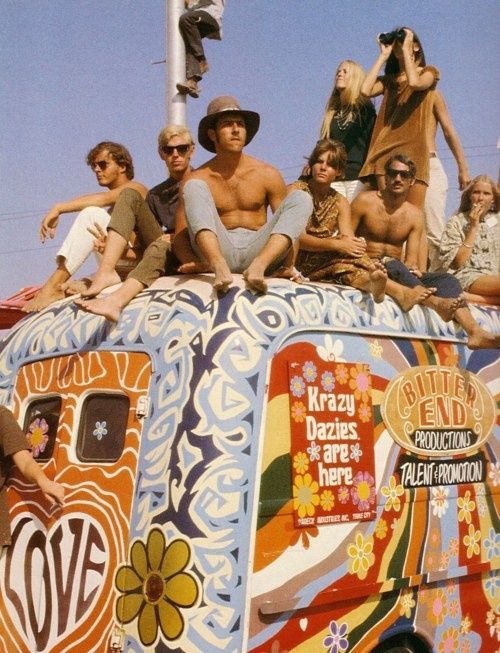
A hippie, according to the original definition of the word, was a person who belonged to the rebellious culture in America in the 1960s. They consisted mainly of young people, and the term spread from America across the whole world. It encompasses a broader community of people all over the globe. Above all it represents an ethic, an identity and a conviction that opposes the establishment. The typical hippie style was characterized by long hair, colorful clothing, a spirit of freedom and the smoking of marijuana.
All of this steadily increased and possibly reached its peak at the Woodstock music festival in 1969. The artists united with the audience and gave rise to a powerful anti-establishment movement. The sound back then was breathtaking, the drugs were strong and presumably the sex was outstanding too. Richie Havens, who opened the Woodstock festival, declared: “Woodstock is not just about sex, drugs and rock ’n’ roll. Above all it should be about spirituality, about love, about sharing, about mutual support and a life in peace and harmony”.
Ever since, the joint too has appeared in a new light, because the influence of this movement was enormous and absolutely formative. It was a symbol of resistance, unity and freedom.
Where do we encounter the joint today?
The story continues to unfold. Slowly but surely, renewed legalization came within reach again. Since the beginning of 2018, purchase and consumption have been legal again in several U.S. states such as California, Maine, Nevada and Massachusetts. Other countries are following suit and are gradually loosening the strict rules around marijuana consumption. Germany, too, is heading in this direction with a number of proposed concepts. But where does this shift and the renewed social acceptance of the subject come from? The answer is social pressure. Although it has lost much of its symbolism of freedom, today it is still about the feeling of belonging. Conveyed through music and film. The history of cannabis continues!
Cannabis - Joints in today's pop culture
From the Beatles all the way to Snoop Dogg - cannabis has long been referenced in music again. For example, Paul McCartney's 1966 song "Got to Get You into My Life" is not, as is often assumed, about a romantic relationship. It is about cannabis, which he had discovered for himself at that time. There is hardly an American artist who leaves cannabis out of their lyrics entirely. Mainly in the hip-hop or stoner genre, "smoking weed until the doctor comes" plays a central role. Reggae should of course also be mentioned here - this music genre is regarded as a kind of symbol for the entire cannabis legalization movement. There is hardly a music video left in which no joint is smoked. This naturally contributes in a certain way to today's portrayal of cannabis. Artists who are known to this day especially for their pro-cannabis stance include, among others, the following:


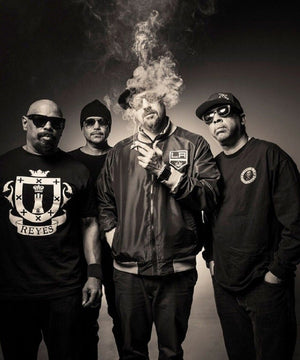

Many other musicians also report a stimulating, sense-expanding effect of the cannabis high that can have an inspiring influence on their artistic work.
Cannabis - Joints in today's pop culture
In the Hollywood film industry, cannabis has held a firm place for several decades now. There are countless films that focus on the culture, the use or the consequences of cannabis consumption. Some of these works have caused a stir in the past and have by now become cult films. Examples of these are films such as:
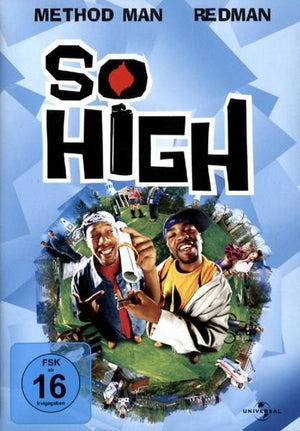
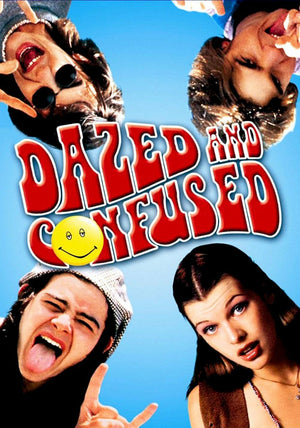
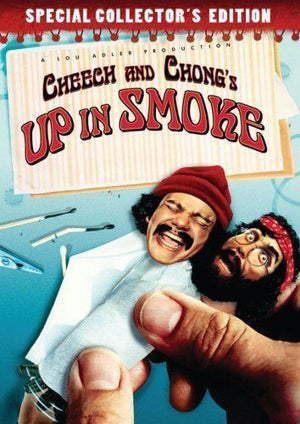

This list could probably be continued endlessly. From the humorous portrayal of "stoner" culture to more serious examinations of the effects of cannabis on the protagonists' lives - the variety is huge. They can also convey social or political messages connected to the topic of cannabis, such as the legalization of cannabis or the discrimination against cannabis consumers. In this way they too play a major part in the fact that the use of marijuana can be talked about more openly again today and that many countries are moving toward legalization.
And so this cultural history comes to a temporary end and merely waits to be continued.
Who invented the joint?
Direct answer
There is no single inventor of the joint. The hand-rolled joint emerged as an everyday custom, not as one person's invention. The earliest trace is considered to be Mexico in the 19th century: farm laborers rolled cannabis in thin cigarette paper, often mixed with tobacco. A frequently cited source dates a first written mention to the year 1856, when an apothecary described the consumption of such rolled cigarettes. From Mexico the practice migrated northward with migrants and seasonal workers. Who exactly rolled the first joint cannot be pinned down historically – paper, tobacco culture and cannabis simply came together. The joint is thus less an invention than a cultural development that took shape and spread over decades and continents.
Where does the word "joint" come from?
Direct answer
The word "joint" comes from French and means "joined" or "united" (from joindre, to join). In 19th-century American English, "joint" initially denoted a shady place, such as a cheap bar or an opium den – a side room that was "joined" to the main building. In the early 20th century the meaning shifted: because the rolled cigarette was passed around and shared in circles, the idea of joining transferred to the object itself. And so the place became an object. In parallel, other terms such as "reefer" or "muggle" existed. The word's history shows how closely language, migration and consumption culture were interwoven in the English-speaking world.
History of the joint: from the 19th to the 20th century
Direct answer
The history of the joint runs from Mexico via the USA to the whole world. In the 19th century, the hand-rolled joint was widespread above all in Mexico. During the Mexican Revolution from 1910 onward, migrants increasingly brought the practice to the southern U.S. states. In New Orleans, jazz musicians took up the habit and carried it via their music to the cities of the north. In the 1930s, prohibition campaigns pushed the joint into public awareness. After the Second World War, the hand-rolled joint became associated with the Beat Generation and later with the hippie movement. By the 1960s at the latest, the joint was a globally known symbol of the counterculture – a journey that took it in a good hundred years from a regional custom to a global icon.
- 19th century: the hand-rolled joint as an everyday custom in Mexico.
- From 1910: spread to the southern U.S. states during the Mexican Revolution.
- 1920s/30s: jazz scene in New Orleans and public debate.
- 1950s: the Beat Generation takes up the hand-rolled joint.
- 1960s: the joint becomes a global symbol of the counterculture.
The joint in pop culture
Direct answer
Hardly any object of consumption has been depicted as often as the joint. In music, the motif runs from jazz and reggae through rock to hip-hop. Reggae legends made the hand-rolled joint internationally visible in the 1970s, while Woodstock in 1969 firmly linked it to the image of the hippie movement. Cinema, too, repeatedly took up the symbol, from road movies to comedies in which the joint stands for rebellion, relaxation or community. Through posters, album covers and fashion graphics, the silhouette of the rolled cigarette became a recognizable sign. This pop-cultural presence explains why the joint conveys far more than its mere contents to this day: it is regarded as an expression of an attitude and a way of life that has shaped entire generations.
How has the joint evolved up to today?
Direct answer
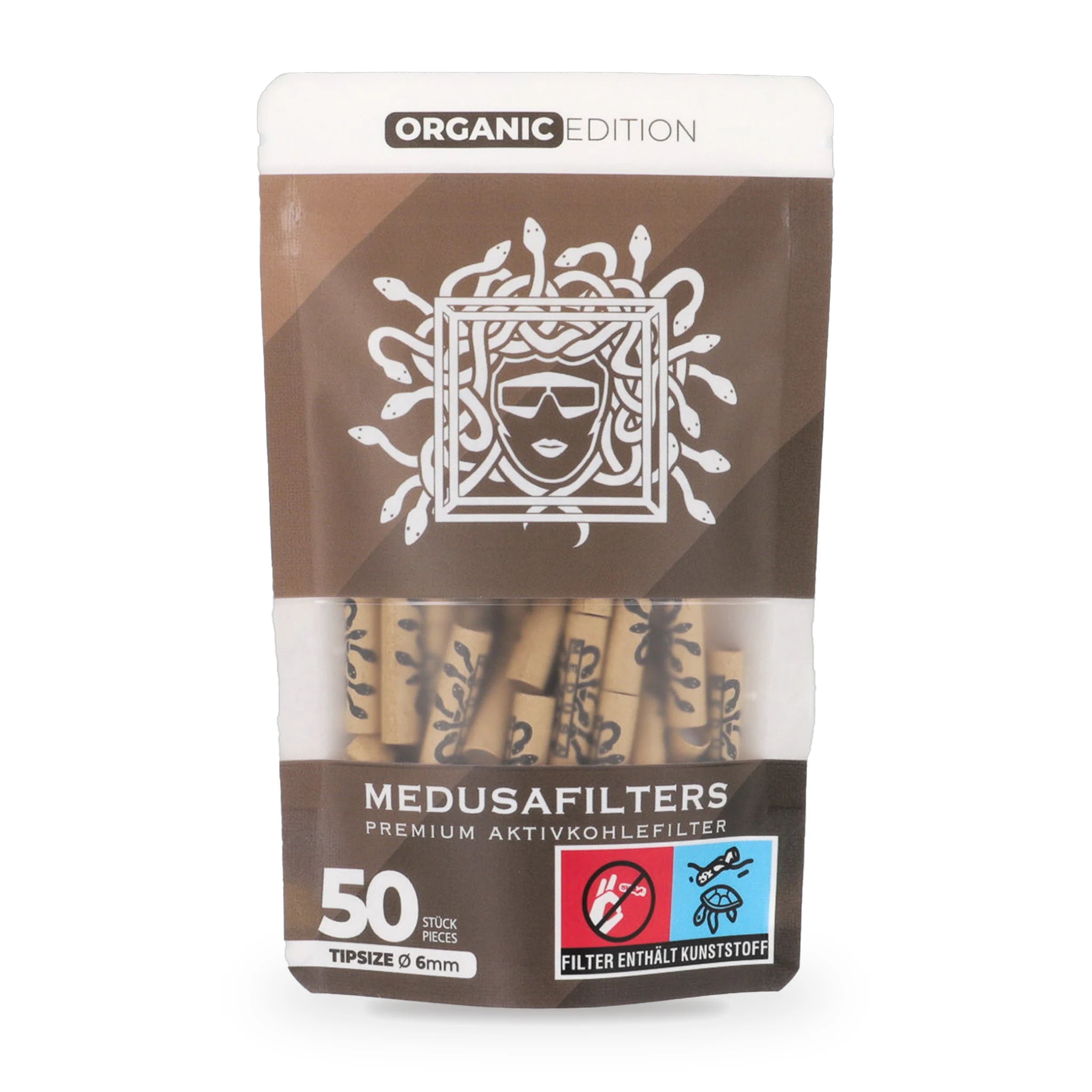
Technically, a lot has changed around the joint. Early hand-rolled joints used coarse paper; over the course of the 20th century, paper manufacturers – for example in Alcoy, Spain, or in France – developed ever thinner, slower-burning leaves. Short formats became longer ones: the King Size Slim long papers format caught on because it offers more space and a more even draw. The way the mouthpiece is handled also changed – from a simply rolled paper tip to prefabricated filters. Modern 6 mm activated carbon filters provide a cooler, filtered draw and hold back coarse particles. In this way, today's joint combines more than a hundred years of cultural history with considerably more advanced accessories.

The right accessories from Medusafilters


Frequently asked questions about the history of the joint
A precise date cannot be documented. The earliest trace is considered to be Mexico in the 19th century, where workers rolled cannabis in cigarette paper. A frequently cited source names the year 1856 for a first written mention. The joint therefore emerged as an everyday custom and not as a datable single invention.
The term comes from the French joindre, "to join". In 19th-century American English, "joint" initially meant a shady, attached side room such as a cheap bar. In the 20th century the meaning shifted to the shared, passed-around cigarette. And so the place became the object we call a joint today.
There is no single inventor. The hand-rolled joint developed as a cultural practice over several decades, starting in Mexico. Paper, tobacco culture and cannabis came together there in everyday life. So instead of an inventor, at the beginning there is a slow, collective development that later spread worldwide through migration and music.
Via the USA and pop culture. After the hand-rolled joint had become known in the United States in the early 20th century, music, film and the 1960s counterculture brought the motif to Europe. The hippie and festival scene in particular made the joint widely visible and well known on the continent.
A filter stabilizes the mouthpiece and holds back coarse particles when drawing. 6 mm activated carbon filters additionally provide a cooler, filtered draw. Combined with King Size Slim long papers, the joint can be rolled more evenly and comfortably than with the coarse papers of earlier decades.
Above all, the accessories. Coarse paper turned into thin, slow-burning leaves, and short formats gave way to longer ones like King Size Slim. Instead of a rolled paper tip, prefabricated filters are used today. The basic idea – rolling cannabis in paper – has, by contrast, remained almost unchanged since the 19th century.