




Best coffee-shop-worthy results - fermenting cannabis

Fermenting cannabis is a crucial and often overlooked step in the post-harvest processing that follows the harvest. While many growers may not fully recognise the importance of this process, it can actually make the difference in the quality of the weed. [1]. During fermentation, the plant parts undergo biochemical changes that can have a positive effect on the flavour, aroma and effect of the cannabis [1]. Through this process, certain compounds in the plants can transform and develop, resulting in a richer and more complex sensory experience. Fermentation also makes it possible to break down potentially harmful compounds and reduce unwanted flavour notes [1]. In addition, fermentation can influence the potency of the cannabis by improving the bioavailability of the cannabinoids and terpenes [1].
What does fermenting cannabis mean?
Fermenting cannabis (curing) means letting the dried flowers mature airtight in jars. Over two to four weeks, enzymes break down chlorophyll and residual substances, the aroma becomes rounder and the smoke smoother. A short daily airing (burping) prevents mould. Only after curing do the terpenes unfold their full bouquet.
The key facts about fermenting cannabis
Why is fermenting cannabis useful?
What is the next step after harvesting and drying your hemp? Find out how to achieve your dream weed.
Read more
The right time for fermentation
All in good time! Before you start fermenting, find out here about the right moment.
Read more
How can you easily ferment cannabis?
Here we have a straightforward guide for you on how to ferment your harvested cannabis and achieve a coffee-shop-worthy flavour.
Read more
4. Answers to the most frequently asked questions
Answered directly – plus what the law says and which accessories fit.
Learn more
Why is fermenting cannabis useful?
Fermenting cannabis offers a wide range of benefits that can significantly influence the quality and experience of the end product. One of the most important reasons why fermentation is useful lies in its ability to improve the flavour and aroma of the cannabis [1]. During the fermentation process, sugars and chlorophyll in the flowers are broken down, resulting in a smoother and more pleasant smoke [1]. These changes can make the smoking experience considerably more enjoyable and help to reduce unwanted bitterness or harshness [1]. Furthermore, fermentation can increase the potency of the cannabis by promoting the conversion of non-psychoactive cannabinoid acids into their psychoactive forms [1]. This process can help to intensify the overall effect of the cannabis and create a more intense experience for the consumer [1]. Another important benefit of fermentation lies in its ability to extend the shelf life of the cannabis [1]. By reducing the risk of mould and bacterial growth, fermentation can help to preserve the quality and integrity of the cannabis over a longer period [1]. This is particularly important for growers and consumers who want to store cannabis for an extended period without it losing quality [1].
New regulation in Germany from April 2024:
From 1 April 2024, a new legal framework for handling cannabis will apply in Germany. This change provides for the legalisation of possessing up to 25 grams of cannabis for personal use as well as growing up to three cannabis plants. In addition, communal cultivation in so-called cannabis clubs will be possible under strict conditions. For more information, please visit the official page of the German Bundestag.
The right time for fermentation
The moment at which fermentation is initiated marks a critical turning point in the process of cannabis post-processing [2]. Fine-tuning this timing requires careful observation of the flowers. After the cannabis flowers have gone through the drying process, they should appear dry on the outside while a certain amount of residual moisture is still present inside [2]. Another indication of readiness for fermentation is the flexibility of the stems; if they bend easily without breaking, this indicates the optimal moisture content required to begin fermentation [2]. Controlling the moisture throughout the entire fermentation process is of crucial importance. An even distribution of moisture within the flowers is essential to ensure successful fermentation [2]. An imbalance in moisture regulation can encourage the growth of mould or impair the fermentation process. It is therefore of the utmost importance to ensure precise moisture control in order to create optimal conditions for fermentation [2].
The right accessories from Medusafilters


How can you easily ferment cannabis?
You can read a comprehensive guide on how to easily ferment cannabis here:
Preparation for fermentation
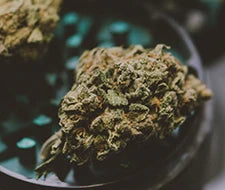
Thoroughly drying the cannabis flowers is crucial to creating optimal conditions for the fermentation process. This means that the outer parts of the flowers should be dry while a slight amount of moisture is still present inside. An indication of the optimal degree of drying is when the stems bend without breaking straight away.
Choosing the right container
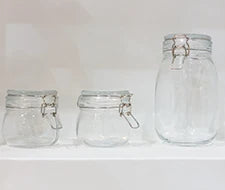
Airtight glass containers are best suited for fermentation [3]. These containers allow controlled moisture regulation inside and make it easier to monitor the fermentation process [3].
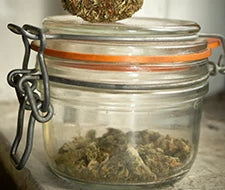
Filling the containers
The dried cannabis flowers should be loosely filled into the glass containers [3]. It is important not to press the flowers too firmly in order to ensure good air circulation and an even distribution of humidity [3].
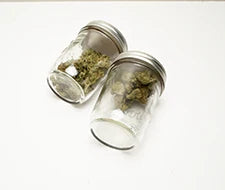
Storage
The filled containers should be kept in a cool, dark place [3]. The ideal temperature for fermentation is between 18 and 22 degrees Celsius in order to create optimal conditions for the fermentation process [3].
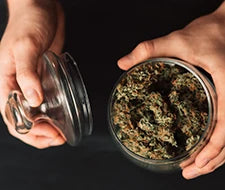
Air exchange ("burping")
In the first few days of fermentation, it is crucial to open the containers daily to release excess moisture and let in fresh air [3]. This process, known as "burping" [3], helps to prevent mould formation and promote even fermentation. After the first week, the frequency of opening can be reduced [3].
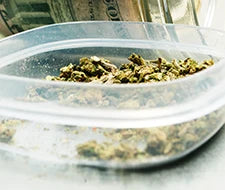
Observation and duration
Regularly checking the condition of the cannabis flowers is essential during the fermentation process. Watch out for signs of mould or unwanted odours [3]. Depending on personal preference and objective, fermentation can take between two weeks and several months [3].
By carefully implementing this simple method, hobby growers can effectively ferment their cannabis flowers and thus achieve an improved smoking experience. Patience and thorough observation are key to the success of this process.
Here you'll find more on the topic of cannabis


Is this legal in Germany? (As of 2026)
Cannabis has been legal in Germany for adults within clear limits since the Consumer Cannabis Act (KCanG) of 1 April 2024 – unchanged as of 2026. The most important key points:
- Possession: up to 25 g while out and about, up to 50 g at your place of residence.
- Home cultivation: up to 3 plants per adult, protected from access by minors.
- Consumption bans: not within sight of schools, facilities for children and young people, playgrounds and sports grounds.
- Passing on & selling remain prohibited.
This is a general overview and not legal advice. These limits do not apply to accessories such as filters, papers or grinders – smoking accessories are freely available.
Frequently asked questions about cannabis
Since the Consumer Cannabis Act (KCanG) of 1 April 2024, private home cultivation has generally been possible for adults. As of 2026, the rough framework allows up to three plants at home, 25 grams while out and about and 50 grams within your own home. This is not legal advice; before growing, find out about the currently applicable rules and any possible regional requirements.
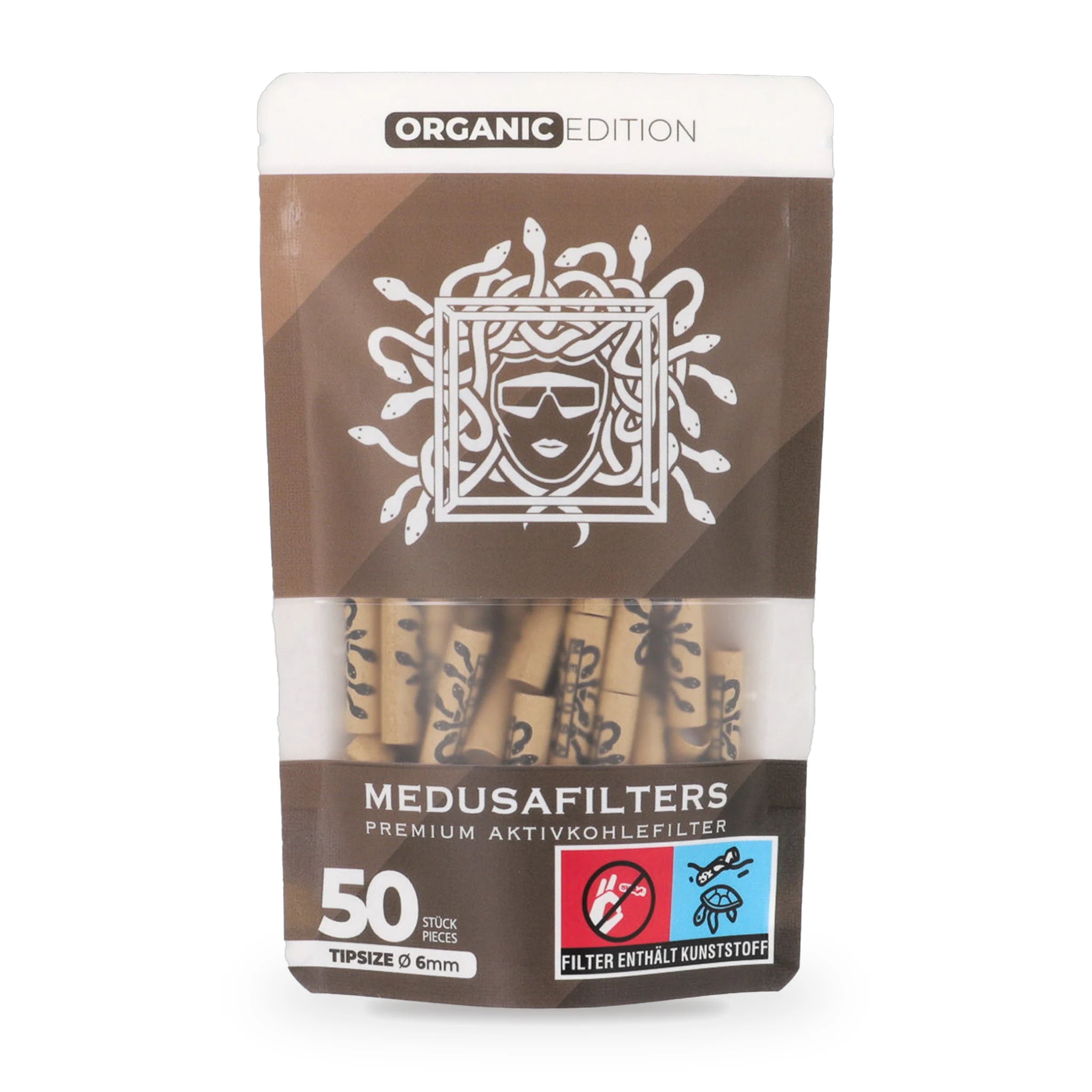
After curing, you grind the flowers shortly before consumption so that the terpenes stay fresh. An aluminium spike grinder breaks the material up evenly without crushing it. For a smooth, cooler draw, a 6 mm activated carbon filter is also worthwhile: it filters the draw and lets the finely balanced aroma come through better, instead of hiding it under harsh smoke.
A good sign is that no more condensation forms when you open the jar and the smell is pleasantly intense rather than grassy or musty. The flowers feel dry on the outside but give slightly when pressed and do not crumble immediately. If the aroma stays stable over several days, the most important maturing phase is complete; after that you can reduce the airing further.
Airtight jars made of dark or light-protected glass, such as swing-top or screw-top jars, are best suited. They keep the moisture even and are easy to open for airing. Plastic containers are less suitable because they absorb odours and build up static. Only fill the jars to about two-thirds so that there is enough air for moisture balancing. Store them in a dark, cool place.
Curing can be somewhat accelerated through constant conditions and regular, targeted airing, but it cannot really be shortened. Aids such as humidity-control packs keep the residual moisture stable and prevent overly rapid drying out. Heat or sunlight speed nothing up, they destroy aroma. Patience is the most important factor: the enzymatic processes need their time, and a rushed cure almost always leads to a flatter flavour and harsher smoke.
Yes, drying is the prerequisite for a good cure. Only once the flowers are dried to the point where thin stems snap when bent do they go into the jar. If they are still too moist, mould is a risk; if they are too dry, the enzymatic process barely gets going. Drying and fermenting are therefore two consecutive steps that together determine aroma and quality.
Sources
[1] Dutch-Passion
[2] Sirius
[3] Cannabib
How do you ferment cannabis step by step?
Direct answer
After drying, the flowers go into airtight jars that you briefly open every day. This is how fermentation works:
- Dry the flowers until the thin stems snap instead of bending.
- Fill them loosely to about two-thirds into clean swing-top or screw-top jars.
- Store them in the dark at around 18 to 20 degrees and moderate humidity.
- In the first week, open the jars daily for a few minutes (burping) so that moisture escapes.
- From week two, reduce the airing to once or twice a day.
- Check the smell and texture each time you open them; a musty ammonia smell means too moist.
After two to four weeks, the aroma is noticeably rounder.
How long do you have to ferment weed?
Direct answer
You ferment weed for at least two to four weeks; that is the basis for a smooth smoke. If you have more patience, let the jars mature for two to three months, as aroma and evenness continue to improve. In the first few days, daily airing is crucial, because the flowers are still releasing residual moisture. If a fresh, strong scent appears on opening instead of a grassy, hay-like smell, the process is on the right track. Curing for longer than six months brings hardly any further benefits and can cost terpenes if storage is too dry. More important than the sheer duration is consistency: steady temperature, dark storage and regular checks. As a rule of thumb, the most noticeable improvement in quality happens in the first four to eight weeks.
What exactly does cannabis curing mean?
Direct answer
Cannabis curing is the English term for the controlled after-ripening of the flowers following drying and refers to the same process as fermenting. During curing, enzymes continue to work in the plant material: they break down chlorophyll, sugars and residual nutrients that would otherwise cause a scratchy, hay-like smoke. At the same time, the moisture content inside the flower stabilises, so that it dries through evenly instead of remaining brittle on the outside and moist inside. The result is a rounder aroma, a gentler draw and better shelf life. Curing and drying are often confused, but they are two phases: first you dry the flowers, then they mature in a closed jar. Without this second step, much of the aroma potential remains untapped.
How does the aroma develop during fermentation?
Direct answer
The aroma develops because curing removes disruptive breakdown products while preserving the delicate terpenes. Terpenes are the fragrant oils responsible for fruity, spicy or earthy notes; they evaporate even with heat and light. That is why dark, cool storage in a closed jar is so important: it keeps the terpenes in the flower while chlorophyll and residual substances are slowly broken down. The more evenly the moisture stays in the jar, the more harmonious the bouquet becomes. Drying too quickly with heat, on the other hand, destroys many aromas before curing even begins. A clean, filtered draw preserves this aroma during consumption too. With a 6 mm activated carbon filter, the draw stays cooler and smoother, so that the fine terpene notes are not masked by harsh smoke.
Which mistakes should you avoid when fermenting?
Direct answer
The most common mistakes when fermenting are storing the flowers too moist, filling the jars too full and forgetting to air them. If the flowers are still too wet when filled in, mould or a pungent ammonia smell quickly develops; the jars then have to be left open longer straight away. Jars that are packed too full barely let any air circulate, so moisture cannot escape. Anyone who skips the daily burping in the first week also risks mould. Flowers that are too dry are a problem too: below around 55 percent residual moisture, the enzymatic process stops and the aroma stays flat. Direct light and heat on the jar drive out the terpenes. So check the smell, texture and any misting of the glass daily, and adjust the airing instead of stubbornly following a schedule.