

HHC - Useful facts about the effects of hexahydrocannabinol

The key facts at a glance
How does HHC work?
HHC is a newer cannabinoid whose effects have not yet been fully researched. In this section you'll learn more about the current state of research.
Read more
Legal status of HHC
The legal status of HHC in Germany and beyond has changed quite significantly over the past few years. Take a look at this section for more information.
Read more
What is HHC?
HHC (hexahydrocannabinol) is a cannabinoid that is obtained by hydrogenation from hemp-based raw materials and is chemically similar to THC. In Germany, HHC is heavily restricted legally in 2026: since June 2024 under the New Psychoactive Substances Act, and since May 2026 additionally as a narcotic (Annex II BtMG). This text classifies the substance neutrally, is not a reference to a medicine and is not medical advice.
What's behind the cannabinoid HHC?
Hexahydrocannabinol (HHC) is a newer substance in the cannabis field, produced by hydrogenating Δ8-THC or Δ9-THC with hydrogen and metal catalysts [1]. In 1947, Roger Adams was the first to successfully produce HHC by synthesizing it from naturally occurring THC. In addition, several research groups have also synthesized HHC stereoselectively from other sources such as citronellal, olivetol and similar compounds [2]. So far, only little information about HHC as an active substance is known. Unlike THC and CBD, which are of natural origin, HHC is mostly produced synthetically.
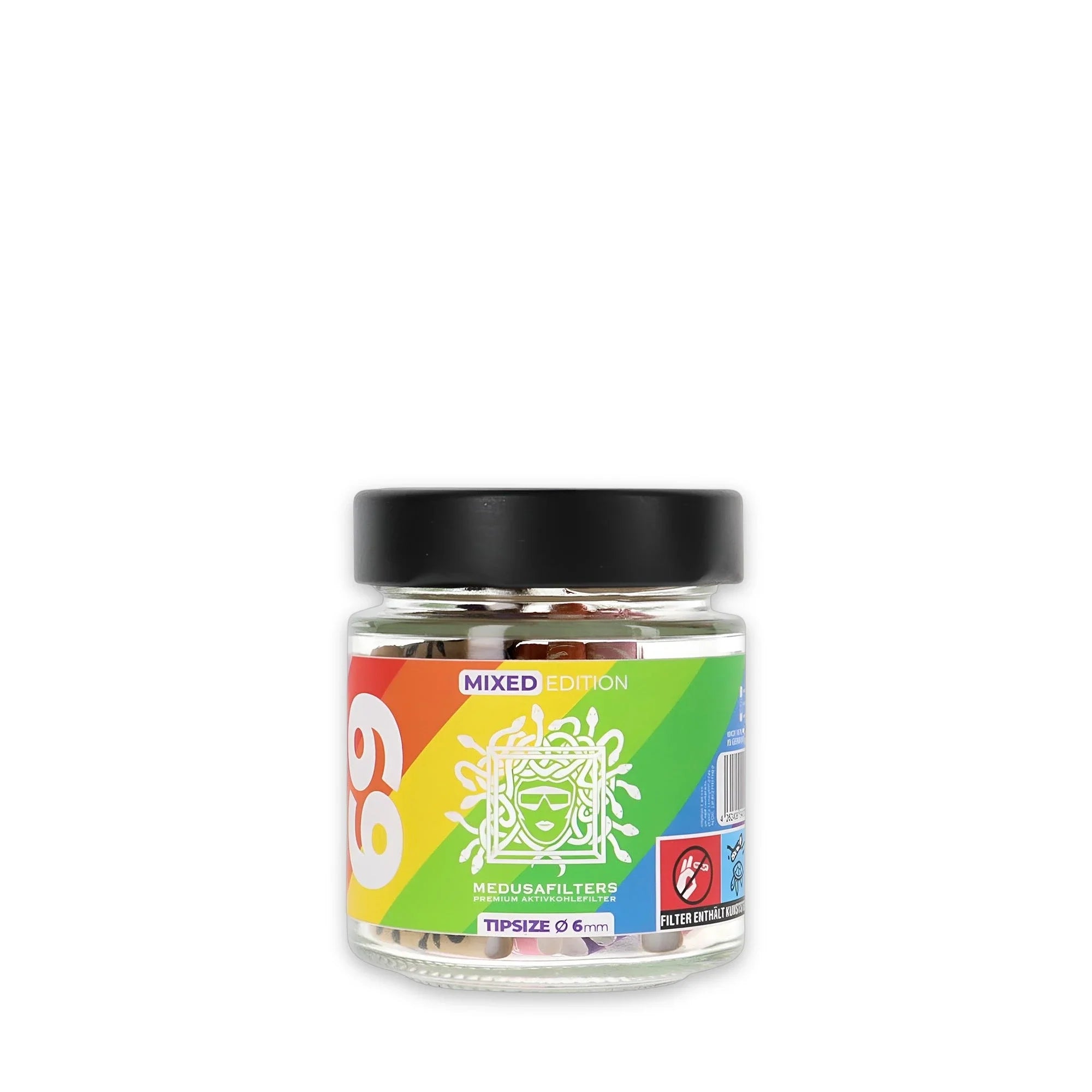
The right accessories from Medusafilters

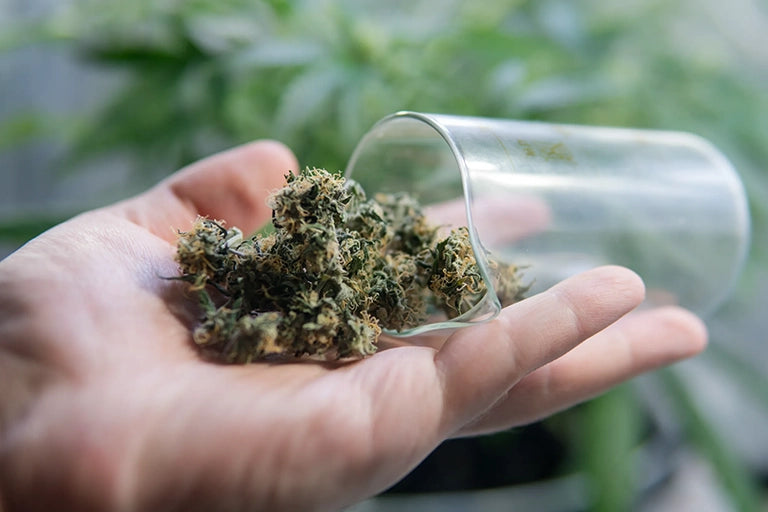
HHC flowers
HHC flowers – also referred to as HHC weed - are morphologically similar to traditional cannabis flowers, but differ in their HHC content. These flowers offer a different cannabinoid profile than THC- or CBD-containing flowers. Although HHC is naturally present in the cannabis plant in small amounts, CBD is often used as the base substance for producing HHC.
How does HHC work?
Scientific research on HHC is still in its early stages, and there is limited information about the specific effects of this cannabinoid. A study in the journal Current Neuropharmacolog found that HHC shows typical cannabinoid effects on the central nervous system, but with lower potency than Δ9-THC. It was observed that HHC has an affinity for the CB1 receptor both in vitro and in vivo, indicating possible therapeutic potential in various pathologies. At the same time, it was pointed out that this affinity for the CB1 receptor also carries a possible potential for dependence, which could lead to abuse [3].
Due to the limited scientific data, it is important to be cautious about assumptions regarding the potential effects of HHC products on health or well-being. As with other cannabinoids, the effect of HHC can vary from person to person, depending on factors such as individual physiology, dosage and the type of use.
Difference THC vs HHC
THC is arguably the best-known psychoactive cannabinoid that occurs naturally in the cannabis plant. A study in the journal adicciones highlights that Δ-9-tetrahydrocannabinol (THC) contributes most strongly to the psychoactivity of cannabis [4]. THC interacts primarily with the CB1 receptors in the brain, which leads to its characteristic effects.
HHC, on the other hand, is a mostly artificially produced cannabinoid that is created by hydrogenating THC. In this process, hydrogen atoms are bonded to the THC molecule, which leads to a change in its chemical structure. This modification can influence the way HHC interacts with the body's cannabinoid receptors.
Another key difference between THC and HHC lies in their legal classification and availability. While THC is classified as a narcotic in Germany, HHC was added to the New Psychoactive Substances Act (NpSG) here on 27 June 2024; since May 2026, synthetically produced HHC has additionally been subject to the Narcotics Act (Annex II). Production and trade are therefore prohibited in Germany - so there can no longer be any talk of a legal grey area in Germany.
In conclusion, THC and HHC have clearly different profiles in terms of their origin, chemical structure, effect and legal treatment. While THC has been extensively researched, scientific research on HHC is still in its early stages.
Difference CBD vs HHC
CBD is a naturally occurring cannabinoid in the cannabis plant and is known for its non-psychoactive properties [5]. HHC, on the other hand, is a mostly artificially produced cannabinoid obtained by modifying THC. The hydrogenation of THC, in which hydrogen atoms are added, leads to the formation of HHC. This chemical conversion could change the way HHC interacts with the cannabinoid receptors in the body and lead to different effects.
An important aspect in comparing CBD and HHC is their legal classification and availability. While CBD is legal in many countries and widely used as a dietary supplement or in cosmetic products, HHC is not freely available for sale in Germany: since 27 June 2024 it has fallen under the New Psychoactive Substances Act (NpSG), and since May 2026 synthetic HHC has additionally been listed in the Narcotics Act (Annex II) – production and trade are therefore prohibited.
You can also use our products for CBD joints and CBD cigarettes
Legal status of HHC
In Germany, HHC has been listed since 27 June 2024 in the New Psychoactive Substances Act (NpSG), which covers the substance groups of synthetic cannabimimetics. In May 2026, synthetic HHC was additionally added to the Narcotics Act (BtMG, Annex II). Production, trade and placing on the market are therefore prohibited - meaning the substance is not freely available for sale [6]. In other countries, such as Austria, the production and trade of HHC are also prohibited [7].
Here you'll find more on the topic of CBD



Is this legal in Germany? (as of 2026)
In Germany, cannabis has been legal for adults within clear limits since the Consumer Cannabis Act (KCanG) of 1 April 2024 – unchanged as of 2026. The most important key points:
- Possession: up to 25 g while out and about, up to 50 g at your residence.
- Home cultivation: up to 3 plants per adult person, protected from access by minors.
- Consumption bans: not within sight of schools, children's and youth facilities, playgrounds and sports venues.
- Passing on & sale remain prohibited.
This is a general classification and not legal advice. These limits do not apply to accessories such as filters, papers or grinders – smoking accessories are freely available.
Further questions
No. HHC has been listed in the New Psychoactive Substances Act since 27 June 2024, and since 23 May 2026 synthetic HHC has additionally been listed as a narcotic in Annex II of the Narcotics Act. Production and trade are therefore prohibited. This information is a general classification based on the current situation and not legal advice; binding information is provided by the authorities.
THC occurs naturally in the cannabis plant, while HHC is created through hydrogenation, i.e. the addition of hydrogen. As a result, HHC has a saturated, chemically more stable ring structure. Both substances are considered psychoactive, but there is significantly less reliable research on HHC. This text makes no claims about health effects – HHC is not a medicine.
There is no reliable statement on this. Authorities cite the lack of long-term studies and open questions about safety as one reason for the regulation. The data on the effects of HHC in humans is limited. This text does not assess risks and does not replace medical advice; for health-related questions, medical advice is the right approach.
The Consumer Cannabis Act (KCanG) has applied only to cannabis since 1 April 2024. Under certain conditions, adults may possess up to 25 grams while out and about, up to 50 grams at home, and grow up to three plants. HHC does not fall under the KCanG, but under the stricter NpSG and BtMG. This is not legal advice.
Due to its classification under the NpSG and, since May 2026, additionally under the Narcotics Act, trade in synthetic HHC is prohibited in Germany. Offers that nevertheless advertise it operate outside the applicable rules. We do not provide any purchase or sourcing recommendation on this; this note serves only as neutral information and is not legal advice.
An activated carbon filter – such as the 6 mm activated carbon filters from Medusafilters – is placed between the tobacco and the mouthpiece when rolling. The activated carbon provides a cooler, smoother and filtered draw and holds back some of the particles. This is purely a product function and not a health-related claim. What you smoke remains your decision and must comply with the applicable laws.
Sources:
[1] https://forgehemp.com/wp-content/uploads/2022/03/Analysis-of-Hexahydrocannabinols-280222.pdf
[2] https://pubs.acs.org/doi/10.1021/acs.joc.9b02962
[3] https://pubmed.ncbi.nlm.nih.gov/37357519/
[4] https://pubmed.ncbi.nlm.nih.gov/28492950/
[5] https://pubmed.ncbi.nlm.nih.gov/21827451/#:~:text=%23++Cannabidiol%2C+a+non,in+the+dorsal+raphe+nucleus
[6] https://www.rbb24.de/panorama/beitrag/2023/02/berlin-cannabis-hhc-spaeti-konsum-legal-markt-thc.html
[7] http://www.drogentest-wien.at/info/hexahydrocannabinol#:~:text=Besitz+und+Konsum+von+HHC,HHC%2DProdukten+in+der+EU.
[8] https://cfah.org/does-hhc-show-up-on-a-drug-test/
[9] https://gemfive.com/different-ways-to-consume-hhc-vaping-edibles-tinctures-and-more/
What is HHC?
Direct answer: HHC (hexahydrocannabinol) is a cannabinoid that is produced on an industrial scale by hydrogenation – that is, the addition of hydrogen – from hemp-based raw materials such as CBD. It is therefore one of the semi-synthetic cannabinoids.
Chemically, HHC is closely related to THC, but differs in a saturated ring structure that makes the molecule more stable against light and air. From around 2022, HHC appeared in vapes, flowers and oils on the European market and was sold at the time in a legal grey area. Important for classification: HHC is not an approved medicine and not a substance with proven benefit – earlier suppliers' information on purity and manufacturing quality was inconsistent. This article describes HHC for informational purposes only and replaces neither medical nor legal advice.
HHC effects: What is known about the substance?
Direct answer: HHC is considered a psychoactive, intoxicating substance – this is one of the reasons why lawmakers have regulated it. Reliable scientific data on the effects of HHC in humans has so far been limited.
Research is investigating, among other things, how HHC binds to the body's own cannabinoid receptors (CB1/CB2); however, large, controlled studies in humans are largely lacking, and possible long-term consequences have not been sufficiently researched. During the earlier sales phase, users described an intoxicating effect and compared it to THC – such reports are subjective, non-binding and no proof of a specific effect. This text deliberately makes no statements about health effects: HHC is not a medicine and does not serve to treat, alleviate or prevent illnesses. Anyone with questions about consumption risks should seek medical advice.
HHC and THC: Where's the difference?
Direct answer: The central difference is chemical in nature: THC (tetrahydrocannabinol) occurs naturally in the cannabis plant, whereas HHC is created through hydrogenation – in which a double bond of the molecule is saturated with hydrogen.
This so-called saturated ring structure is the core of the difference. It makes the HHC molecule chemically more stable and less susceptible to degradation by light, heat and oxygen. Legally, both substances are treated strictly in Germany: THC is subject to cannabis and narcotics law, while HHC was initially covered by the New Psychoactive Substances Act and, since May 2026, additionally by the Narcotics Act. On the effects in humans, there is significantly less reliable research on HHC than on THC – proven statements are correspondingly limited. Here, too, the following applies: no medical advice and no consumption recommendation.
HHC legal status in Germany 2026
Direct answer: In Germany, HHC is heavily restricted legally in 2026. Since 27 June 2024, HHC has been listed in the New Psychoactive Substances Act (NpSG), and since 23 May 2026 synthetic HHC has additionally been listed as a narcotic in Annex II of the Narcotics Act (BtMG).
In practical terms, this means: the production, trade and import, export and transit of HHC and related substances (such as HHC-P) are prohibited and can have criminal consequences. With its inclusion in the BtMG, the handling of synthetic HHC is regulated even more tightly. The regulations name exceptions, among others, for cannabis for medical purposes under the Medicinal Cannabis Act. Legal questions in individual cases are complex and can change – this section is a general classification based on the current situation and is expressly not legal advice. Binding information is provided by the authorities or a lawyer.
HHC, cannabis and the KCanG
Direct answer: HHC and classic cannabis (THC) are treated differently under the law. For cannabis, the Consumer Cannabis Act (KCanG) has applied since 1 April 2024, allowing possession within narrow limits – HHC, however, does not fall under it, but under the NpSG and BtMG.
Under the KCanG, adults (as of 2026) may, under certain conditions, possess up to 25 grams of cannabis while out and about and up to 50 grams at home, as well as grow up to three plants. These rules apply exclusively to cannabis, not to HHC or other semi-synthetic cannabinoids. Anyone who confuses the two risks misjudgements, because the significantly stricter provisions of narcotics law apply to HHC. This, too, is only a rough guide and not legal advice; when in doubt, official bodies provide binding information.