

The short answer: With the same carbon quality, 6 mm and 7 mm activated carbon filters filter practically equally well. The difference lies in the format: 6 mm (Slim) fits today's common Slim and King Size papers, draws pleasantly light and uses less material when rolling. 7 mm is the older standard size for thicker joints. For the vast majority, 6 mm is the right choice today — and that's exactly why at Medusafilters we carry exclusively 6 mm filters.
The difference in 30 seconds
Both sizes describe the diameter of the filter — not the filtering performance. What changes as a result, you can see here:
| 6 mm (Slim) | 7–8 mm (Standard) | |
|---|---|---|
| Fits | King Size Slim, 1¼ papers, longpapers | wide papers, thick joints, blunts |
| Draw resistance | pleasantly light, even | slightly more open draw |
| Material usage | lower — slimmer end piece | higher, joint becomes thicker |
| Carbon amount per filter | less, easily enough for one joint | more, no advantage with normal use |
| Prevalence in 2026 | clear standard | niche for XXL formats |
6 mm or 7 mm activated carbon filter: what really matters
The filtering effect happens in the activated carbon itself: its porous surface binds part of the pollutants and condensing tar particles before the smoke reaches you — the principle is called adsorption, and we've explained it in detail here. What matters, therefore, is carbon quality, fill amount and clean manufacturing — not whether the filter is a millimeter thicker.
The diameter, on the other hand, determines three practical things:
- Fit: A 6 mm filter can be rolled cleanly and tightly with slim papers. A 7 or 8 mm filter forces you to use wider papers, otherwise the paper folds and pulls in side air.
- Draw behavior: Thanks to the slimmer cross-section, a 6 mm filter draws evenly and with pleasant resistance — similar to a well-built tip, just with a filtering effect.
- Look & consumption: Slimmer filters mean slimmer joints. You use less paper and less mix, and the end piece keeps its shape.
Why we go with 6 mm at Medusafilters
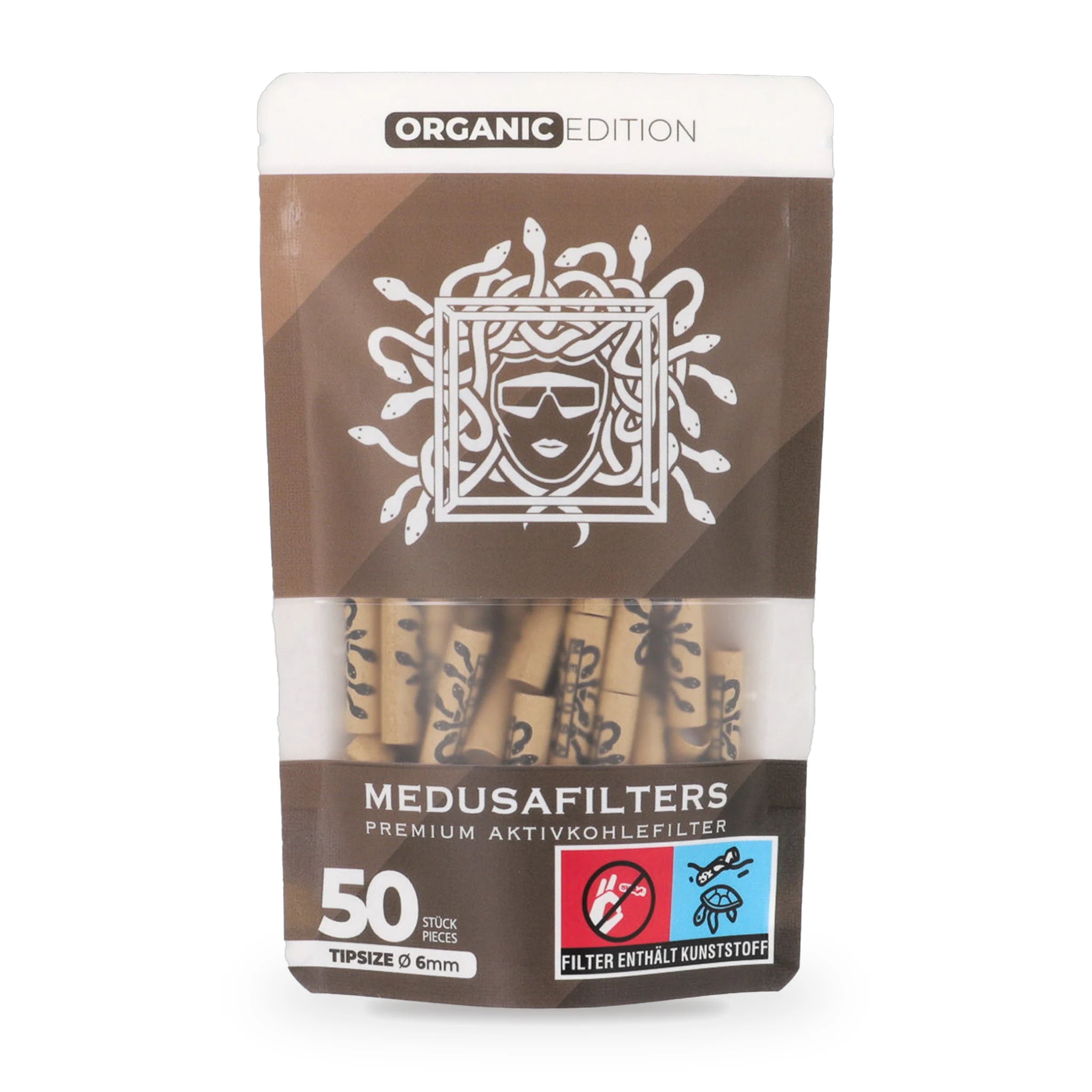
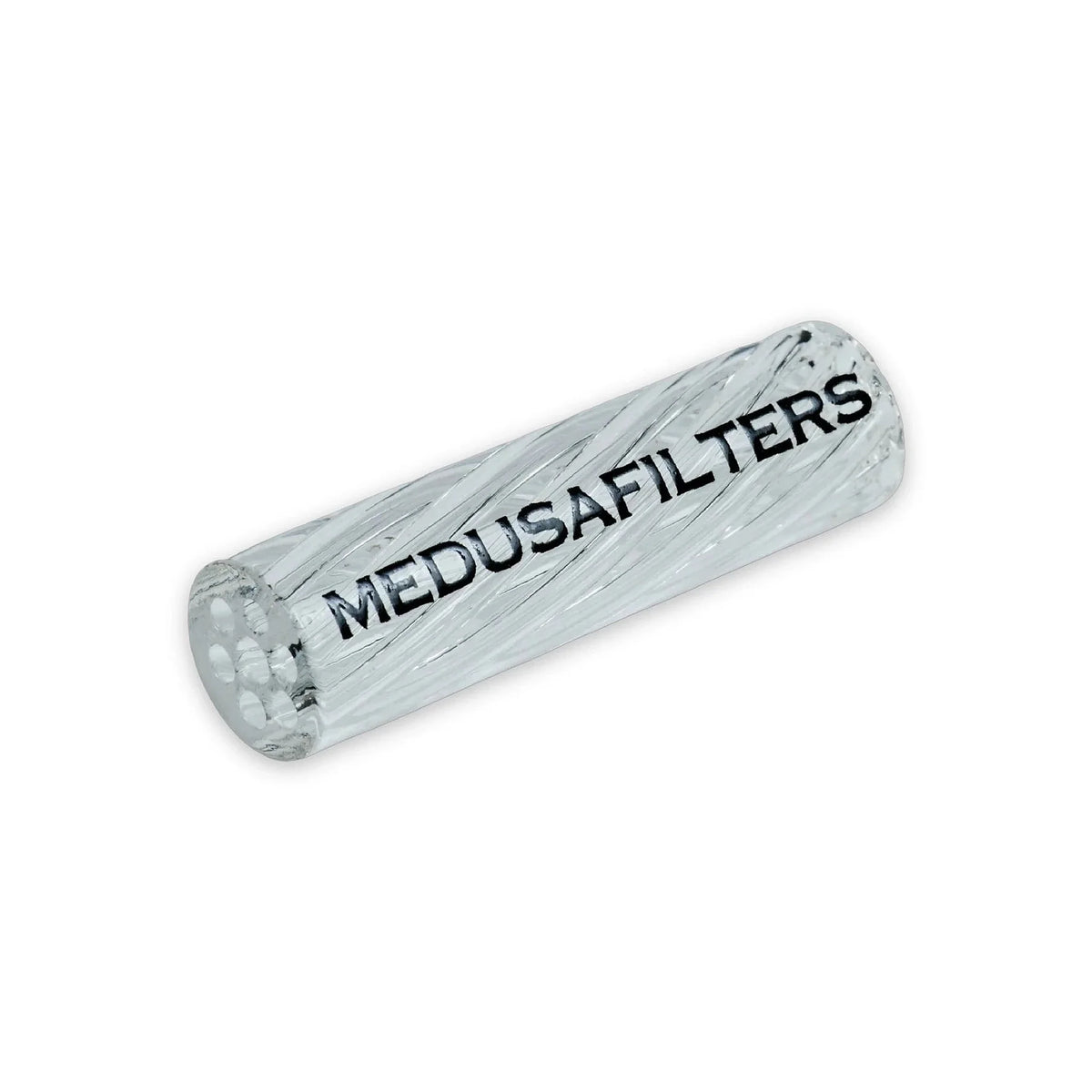
We deliberately chose the Slim format and build our activated carbon filters exclusively in 6 mm — with 25 mm length, a sleeve made of German cardboard, coconut activated carbon and breathable caps made of cellulose acetate. The caps keep the carbon dust inside the filter and ensure that the air flows evenly through the entire carbon fill instead of finding its way along the edge.
The result: free draw from the first to the last pull, no scratching and no clogging — if you know that problem, you'll find the most common causes of clogged filters here. We currently don't carry a 7 mm range, and that's not a cost-cutting measure: for the paper formats that make up 90% of what's rolled today, 6 mm is simply the more fitting size.
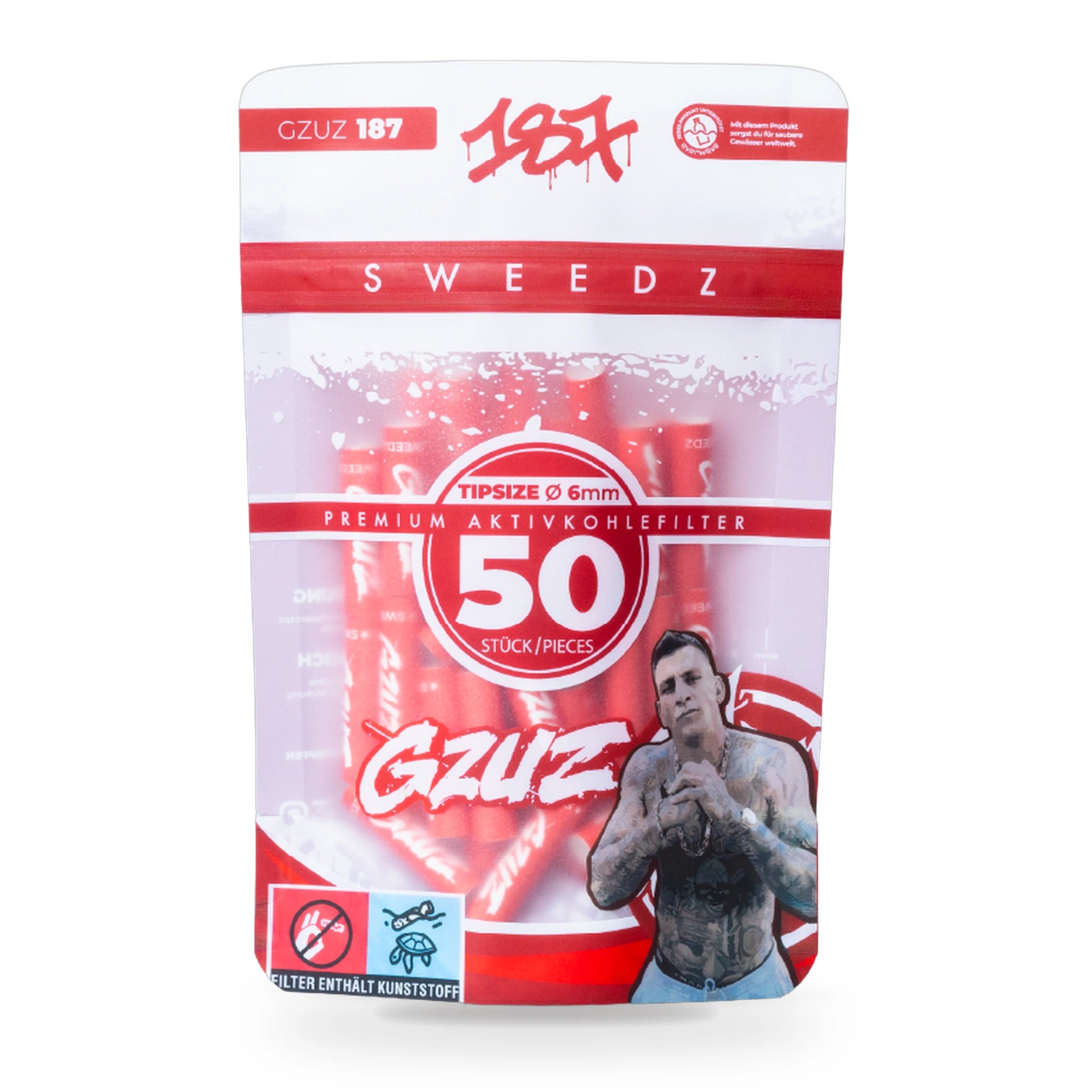
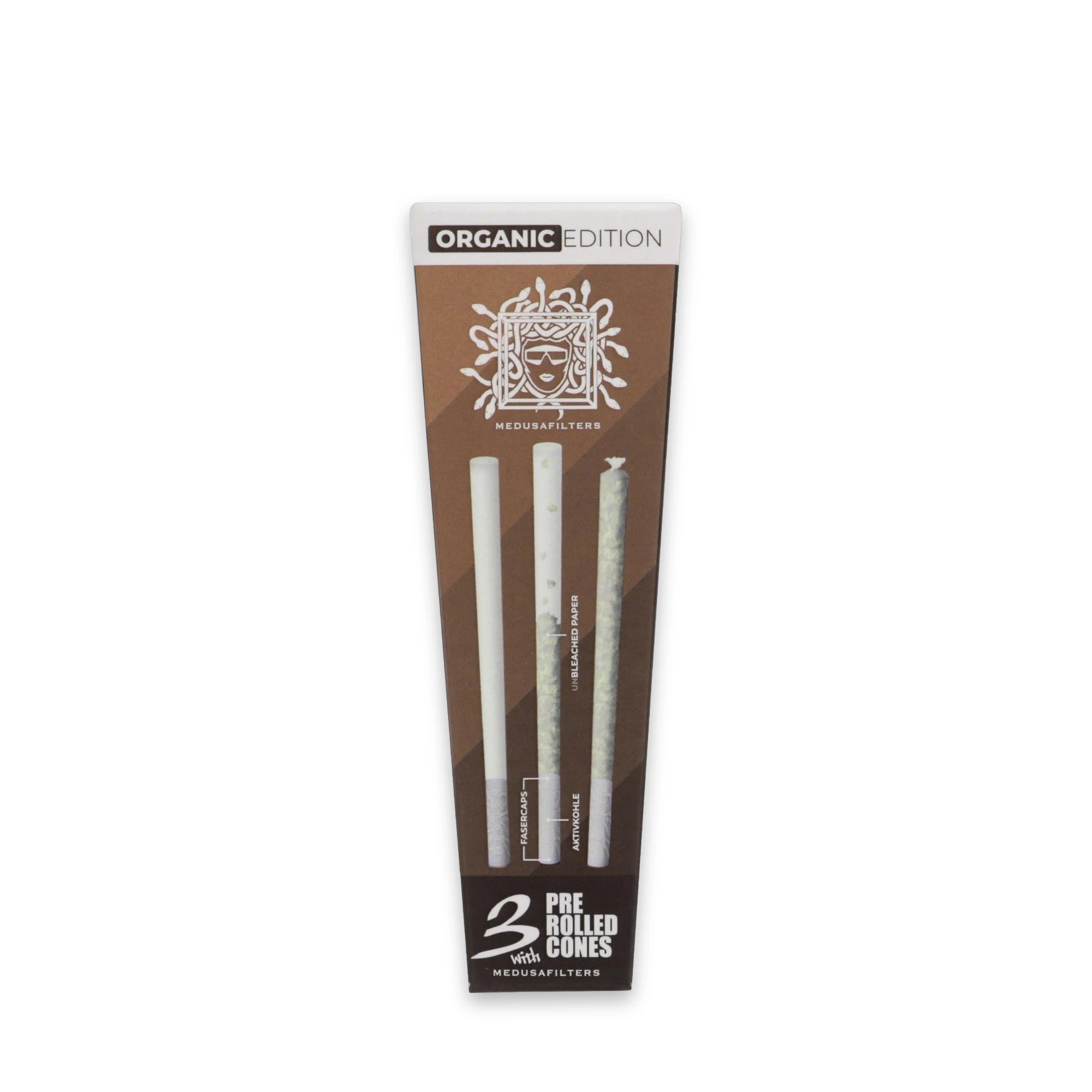
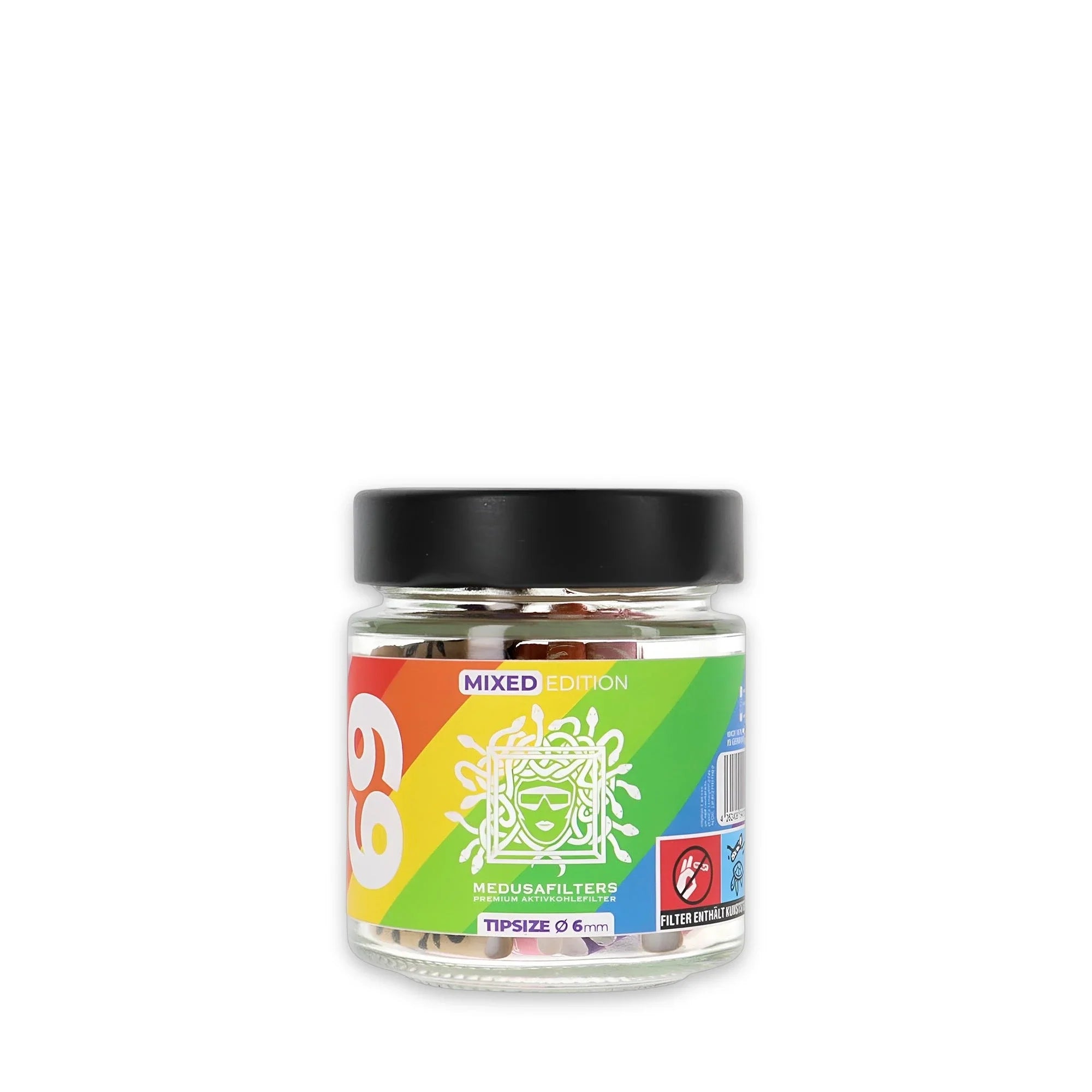
We carry the 6 mm format consistently through all editions — from ORGANIC through VIOLET, SUNSET and ROSÉ to the limited artist editions. Technically they are all built identically; so you choose by look, not by performance. And because heavy rollers like to do the math: from the 250-pack the unit price drops noticeably, and the 1000-pack is the stock-up classic for everyone who doesn't want to reorder all the time.
Which size does your paper need? The practical test
If you're unsure which filter size fits your setup, a simple rule of thumb helps: roll the paper loosely around the filter once before you roll up. The paper should be able to wrap around the filter at least one and a half times without creating a thick bulge of paper at the mouthpiece.
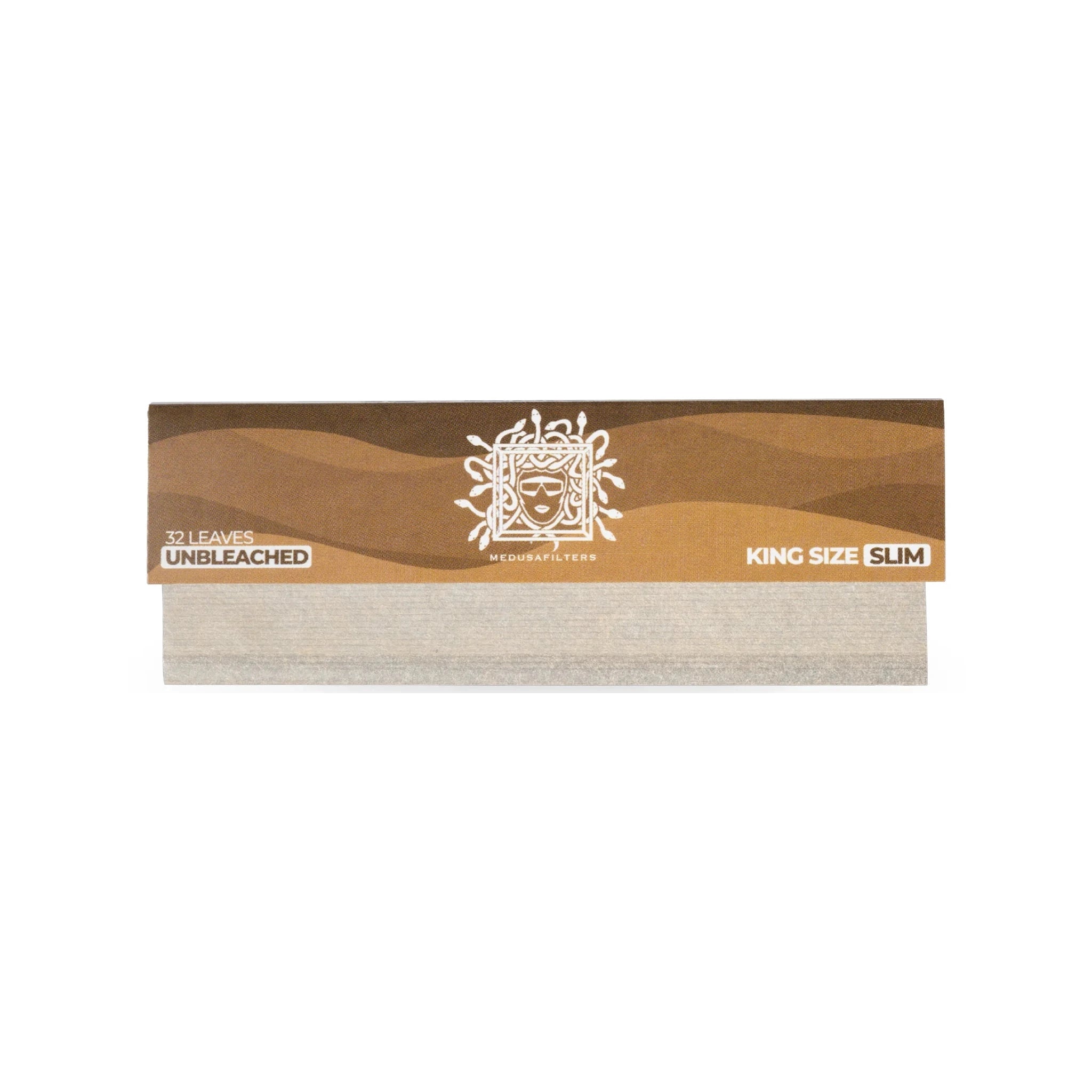
- King Size Slim (approx. 44 mm wide): The classic among longpapers — with a 6 mm diameter you get a clean, conical joint with a stable mouthpiece. With 8 mm the end piece quickly becomes too bulgy.
- 1¼ papers (approx. 78 × 44 mm): For shorter, slim formats 6 mm is practically the only option — a thicker filter eats up too much paper length here.
- King Size (wide) and blunt wraps: Here you have enough material for both sizes; a wider filter can fill the mouthpiece better.
One more detail that's often overlooked: the length. Our filters are 25 mm long — enough carbon distance for a noticeable filtering effect, but short enough that the actual content doesn't lose space unnecessarily. Some cheap filters cut corners here first, and that's exactly what you notice in the draw in the end.
Three typical mistakes when buying filters
- Looking only at the price per filter: What matters is the price per session. A filter that costs half as much but clogs up halfway through the joint is no bargain. Larger packs (100, 250, 1000) push down the unit price without loss of quality.
- Confusing size with performance: „Thicker = filters better" sounds logical, but isn't true — the carbon quality and the even airflow make the difference, not the millimeter of diameter.
- Open storage: Anyone who leaves the 250-pack lying around open for months is surprised by the declining effect. Activated carbon draws moisture from the air — close the bag, store dry, done.
Who 7 mm or 8 mm can still make sense for
Honest answer: if you regularly roll very thick joints or blunts, a wider filter fills the mouthpiece better and you have to squeeze the paper less. Anyone who prefers the very open, low-resistance draw can also be happy with 7 or 8 mm. But those are special cases — for everyday rolling with King Size Slim or 1¼ papers, 6 mm remains the more coherent choice.
If you're wondering why the 7 and 8 mm sizes exist at all: they come from a time when activated carbon filters were mainly intended for pipes and widely rolled formats. With the triumph of slim papers, the market has turned — today the slim size is the rule and the wide one the exception, not the other way around.
Recognizing good filters — regardless of size
Whether 6, 7 or 8 mm, you can recognize quality by these points:
- Carbon: High-quality activated carbon (e.g. from coconut shells) with high pore density — it does the actual filtering work. What the carbon does in detail, you can read in “What do activated carbon filters do?”.
- Caps: Air-permeable caps on both sides prevent carbon dust in the mouth and hotspots in the carbon fill.
- Sleeve: Sturdy, uncoated cardboard that doesn't soften while rolling.
- Freshness: Airtight-packed filters — activated carbon also binds air humidity, open storage costs effectiveness.
Ready for a cooler, smoother draw?
View activated carbon filters →Frequently asked questions about 6 mm and 7 mm filters
Does a 6 mm filter fit in every paper?
In all common formats — from 1¼ through King Size Slim to longpapers. That's exactly what the Slim size is made for: the paper closes cleanly around the filter, without folds and without side air.
Do 7 mm filters filter better because they contain more carbon?
No. For the amount of smoke from one joint, the carbon fill of a 6 mm filter with 25 mm length is more than amply dimensioned. More carbon only means more effect when the existing carbon would be exhausted — and with a single joint you're far from that.
Do I notice the difference in taste?
Between the sizes hardly — but definitely between filter and no filter: with activated carbon the smoke arrives noticeably milder and cooler. Whether that's also “healthier”, we assess in a differentiated way in this article.
Can I use a 6 mm filter multiple times?
The filters are intended for one session. The carbon weakens with each use, and at the latest when the draw becomes harder, the filter is saturated — then it's better to replace it.
What's better: an activated carbon filter or a self-made tip?
A rolled cardboard tip stabilizes the mouthpiece but filters nothing — it only holds back coarse crumbs. The activated carbon filter does both: it gives the joint shape and takes part of the pollutants and the harshness out of the smoke via the carbon. Anyone switching from a tip to activated carbon usually notices the difference at the first pull, in the clearly milder, cooler smoke.
Want to test it yourself? Our 6 mm activated carbon filters are available in all editions from the 50-pack — and once you know what free draw feels like, you won't want to go back 💜

Leave a comment
This site is protected by hCaptcha and the hCaptcha Privacy Policy and Terms of Service apply.